What Is IPTV?
IPTV is short for Internet Protocol Television. At its core, it describes a method of delivering television programming using Internet Protocol technology. Rather than depending exclusively on distribution methods associated with traditional cable or satellite television, video information can be transported through an IP-based network.
The term may initially sound complicated because Internet Protocol is normally associated with computers and networking. For the viewer, however, the concept is relatively straightforward. Television programming is converted into digital information, transported through a network and received by compatible equipment that turns that data into the picture and sound displayed on your screen.
The Canadian Radio-television and Telecommunications Commission, better known as the CRTC, describes IPTV as digital television channels delivered through a high-speed Internet connection. It discusses IPTV alongside other television-delivery options such as cable and satellite.
This distinction is useful because the term IPTV is sometimes used very broadly online. Not every video watched over an Internet connection is necessarily categorized in exactly the same way. Understanding that difference makes the rest of IPTV technology easier to understand.
How Does IPTV Work?
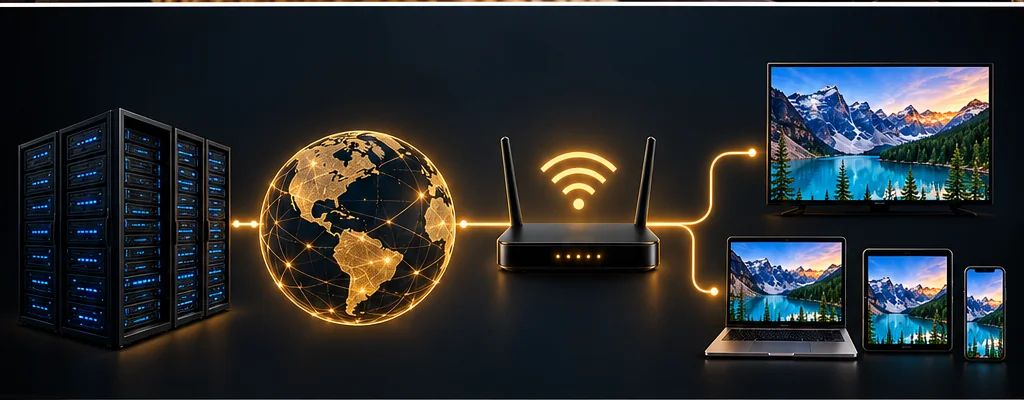
To understand how IPTV works, think of television as digital data. Programming has to move from its original source through a delivery infrastructure and eventually reach equipment capable of presenting the video to the viewer.
Programming
Television or video programming enters the provider’s distribution system.
IP Delivery
Digital video information is transported using Internet Protocol technology.
Receiving Device
Compatible equipment receives and processes the television stream.
Your Screen
The selected programming is displayed on the television or another supported screen.
IP technology gives television platforms flexibility in how video information is transported and managed. The exact implementation can differ substantially between providers, which is one reason two services described as IPTV do not necessarily operate in exactly the same way.
Network performance can also matter. If video information cannot reach the receiving equipment consistently, playback can be interrupted even when a basic Internet speed test appears fast.
How Can IPTV Deliver Live TV and On-Demand Content?
IP-based television technology can support different types of viewing. One of the most familiar is live television, where a viewer selects programming that is currently being distributed according to a schedule. Another is on-demand viewing, where available programming can be selected when the viewer wants to watch it.
These experiences are related but different. Live television remains time-based. A program is available according to its broadcast schedule. On-demand content gives viewers greater control over when an available movie, episode or other program begins.
The features available to an individual household depend on the television provider, package, programming rights and equipment being used. Using IPTV technology therefore does not mean that every service automatically includes the same live channels, movies, series or on-demand features.
That distinction is worth remembering when comparing services. Technology explains how television can be delivered, but it does not by itself define the programming included in a particular subscription.
Is IPTV the Same as Netflix or Regular Online Streaming?
Not necessarily. This is one of the most common points of confusion when people first research what is IPTV.
Both IPTV and ordinary online video can involve Internet Protocol technology, but that does not make the terms interchangeable in every technical or regulatory context. In Canada, the CRTC distinguishes IPTV services from online video services when describing television viewing options.
Watching something through an Internet connection does not by itself tell you how that service is categorized or distributed. IPTV describes an IP-based television-delivery concept, while online video encompasses a broader range of audiovisual services available over the Internet.
For viewers, the distinction can affect equipment, subscriptions, programming and how the service is accessed. An application built primarily around an on-demand catalogue is therefore not automatically the same as a managed television service simply because both can appear on the same Smart TV.
What Is IPTV Compared With Cable and Satellite?
One of the easiest ways to understand IPTV is to compare how different television technologies move programming toward your screen.
| Television Method | Basic Delivery Method | Typical Requirement |
|---|---|---|
| IPTV | IP-based broadband or network delivery | Compatible service access and receiving equipment |
| Cable TV | Cable distribution infrastructure | Provider connection and compatible equipment |
| Satellite TV | Broadcast signal delivered by satellite | Satellite reception equipment and receiver |
| Online Video | Content accessed through an Internet connection | Internet access and compatible application, browser or device |
None of these technologies is automatically the best option for every household. Availability, programming, pricing, Internet connectivity, device preferences and viewing habits can all influence the decision.
That is also why comparing television services solely according to a headline channel count can be misleading. A household that regularly watches only a handful of programs has different requirements from a household that depends heavily on live television across many content categories.
What Do You Need to Use IPTV?
Requirements vary according to the provider, but three components are particularly important: appropriate network connectivity, compatible receiving equipment and authorized access to the television service.
1. A Suitable Network Connection
Video requires sustained data transfer. A connection therefore needs sufficient capacity for the type and quality of video being delivered, but maximum download speed is not the only factor that matters.
Network congestion, unstable Wi-Fi, distance from the wireless router, other household devices and the performance of the receiving equipment can all influence playback.
2. Compatible Equipment
The appropriate equipment depends on the television provider. Some managed IPTV services use provider-supplied receiving equipment, while other IP-based viewing experiences can support compatible televisions, media devices, computers, phones or tablets.
3. Authorized Service Access
Owning a compatible screen does not by itself provide television programming. Viewers still require the authorized account, receiver, application or other access method specified by their television provider.
If you already have a compatible service and need device-specific instructions, visit our IPTV installation guide to find setup information organized by platform.
What Devices Can Be Used to Watch IPTV?
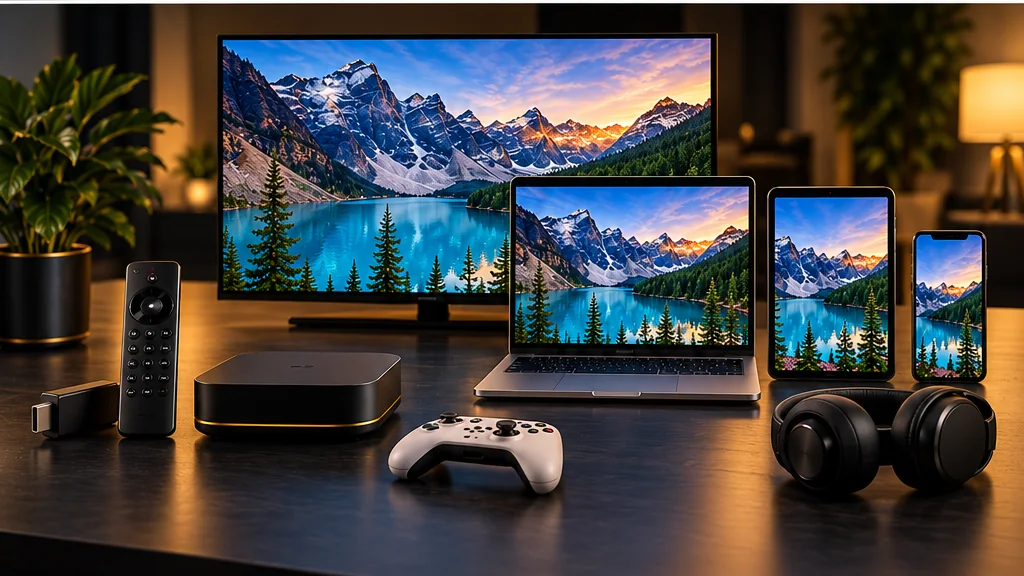
Modern households often watch television on more than one type of screen. Depending on the television service and its supported platforms, IP-based television can be available across several categories of devices.
- Compatible Smart TVs
- Provider-supported set-top boxes
- Compatible streaming media devices
- Supported Android devices
- Apple TV where supported by the service
- Desktop and laptop computers
- Compatible smartphones and tablets
Compatibility should always be confirmed before purchasing new hardware. Two televisions that both connect to the Internet may use different operating systems, applications and installation methods.
That is why our website uses separate device guides instead of assuming one installation procedure works on every platform. Start with our general IPTV setup guide and continue to the instructions for your particular device.
What Affects IPTV Streaming Quality?
A smooth IPTV experience depends on more than one number from an Internet speed test. The entire path between the television service and the receiving device can affect playback.
Connection Stability
A connection that repeatedly drops or experiences large fluctuations can interrupt video even when its maximum measured download speed is high. Consistency becomes particularly important during continuous live viewing.
Wi-Fi Conditions
Wireless performance can change according to distance, walls, interference and congestion. Two devices connected to the same home Internet service can therefore experience different network quality.
Other Household Network Activity
Large downloads, software updates, cloud backups and several simultaneous video streams can compete for the same household connection. The effect depends on the capacity of the connection and how the network is configured.
Device Performance
Receiving hardware also matters. Older or overloaded devices can sometimes become a bottleneck. Using supported software and keeping compatible devices updated can help prevent issues related to outdated applications or operating systems.
Because buffering can have several causes, troubleshooting should be systematic rather than assuming every interruption comes from the television provider. Our IPTV troubleshooting cluster will cover buffering, Internet speed and home-network issues in greater depth.
What Should Canadian Viewers Know About IPTV?
Canadian viewers should understand that terminology matters. The CRTC explains that IPTV services distribute digital television channels through a high-speed Internet connection and discusses IPTV separately from cable, satellite and online video services.
That definition is more precise than the way the term is sometimes used in casual online discussions. A television service should therefore not be evaluated simply because someone describes it using the word IPTV.
Consumers should consider who provides the service, what programming is legitimately available, what equipment is required, what the subscription terms include and whether the service suits their household.
For authoritative information about television options available in Canada, consult the CRTC guide to television viewing options.
The legal and regulatory questions surrounding television services deserve their own detailed explanation, so we cover those separately rather than treating a technology definition as legal advice.
What Should You Check Before Choosing an IPTV Service?
Once you understand what IPTV is, the next step should not simply be searching for the largest advertised channel number. A better approach is to compare the characteristics that actually matter to your household.
- Device compatibility: confirm that your preferred television or viewing device is supported.
- Programming: check whether the programming you actually want is legitimately available.
- Connection requirements: consider the quality and stability of the network where you plan to watch.
- Pricing: understand the initial cost, renewal conditions and any additional equipment requirements.
- Support: look for clear setup, troubleshooting and contact information.
- Terms and policies: review trial, cancellation, refund and privacy information before making a commitment.
Taking time to evaluate those details usually provides more useful information than choosing solely according to promotional claims. Understanding the underlying technology helps you ask better questions before selecting any television service.
Ready to Check Your Device Compatibility?
Now that you understand the basics of IPTV technology, the next practical step is checking how your preferred device works with your television service. Browse our installation resources or review the available trial information before choosing a plan.
Frequently Asked Questions About IPTV
What does IPTV stand for?
IPTV stands for Internet Protocol Television. It refers to television delivery using Internet Protocol technology rather than relying only on traditional cable, satellite or terrestrial distribution methods.
What is IPTV in simple terms?
In simple terms, IPTV is television delivered using IP-based network technology. Digital video information travels through the network to compatible receiving equipment, which displays the programming on your screen.
How does IPTV work?
Television programming is processed as digital data, transported through an IP-based delivery system and received by compatible equipment. The precise technical implementation varies between television providers.
Is IPTV the same as Netflix?
Not necessarily. Although both can involve Internet Protocol technology, the CRTC distinguishes IPTV television services from online video services when explaining viewing options in Canada.
Does IPTV require an Internet connection?
IP-based television requires the connectivity specified by the provider. The CRTC describes IPTV services as delivering digital television channels through a high-speed Internet connection.
Can IPTV work on a Smart TV?
It can when the particular television service supports that Smart TV platform or compatible receiving equipment. Device support should always be confirmed with the provider.
What can cause IPTV buffering?
Possible causes include unstable network connectivity, Wi-Fi interference, congestion, competing household traffic, device performance and service-side issues. Troubleshooting should therefore consider the complete connection rather than only maximum download speed.